


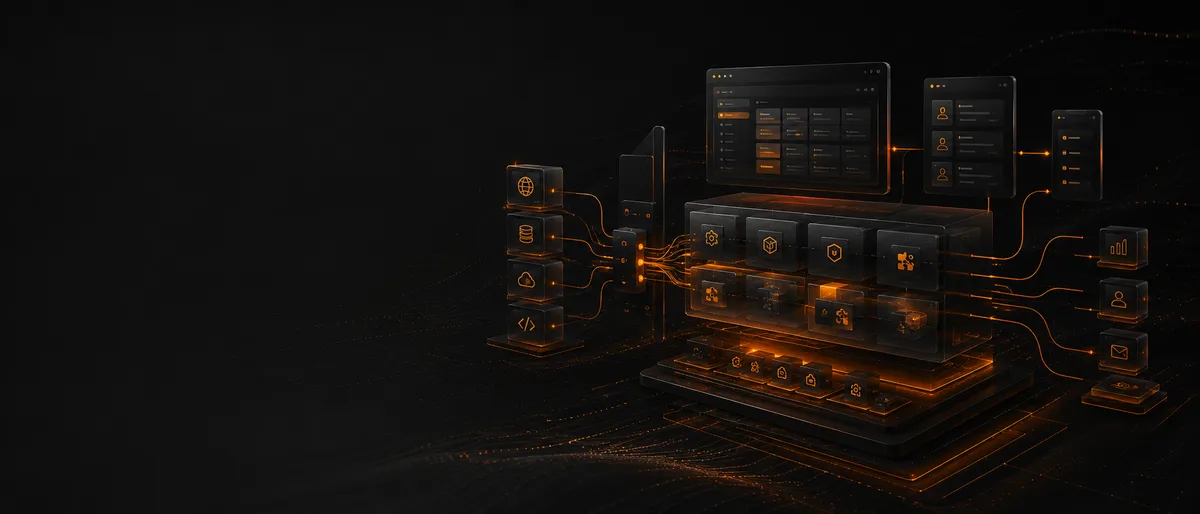
01 / Who we work for
Your organisation determines the digital approach.
A growing business, startup, municipality or software agency works with different goals, processes and responsibilities. That is why we tailor not only the solution but also our approach to your organisation.
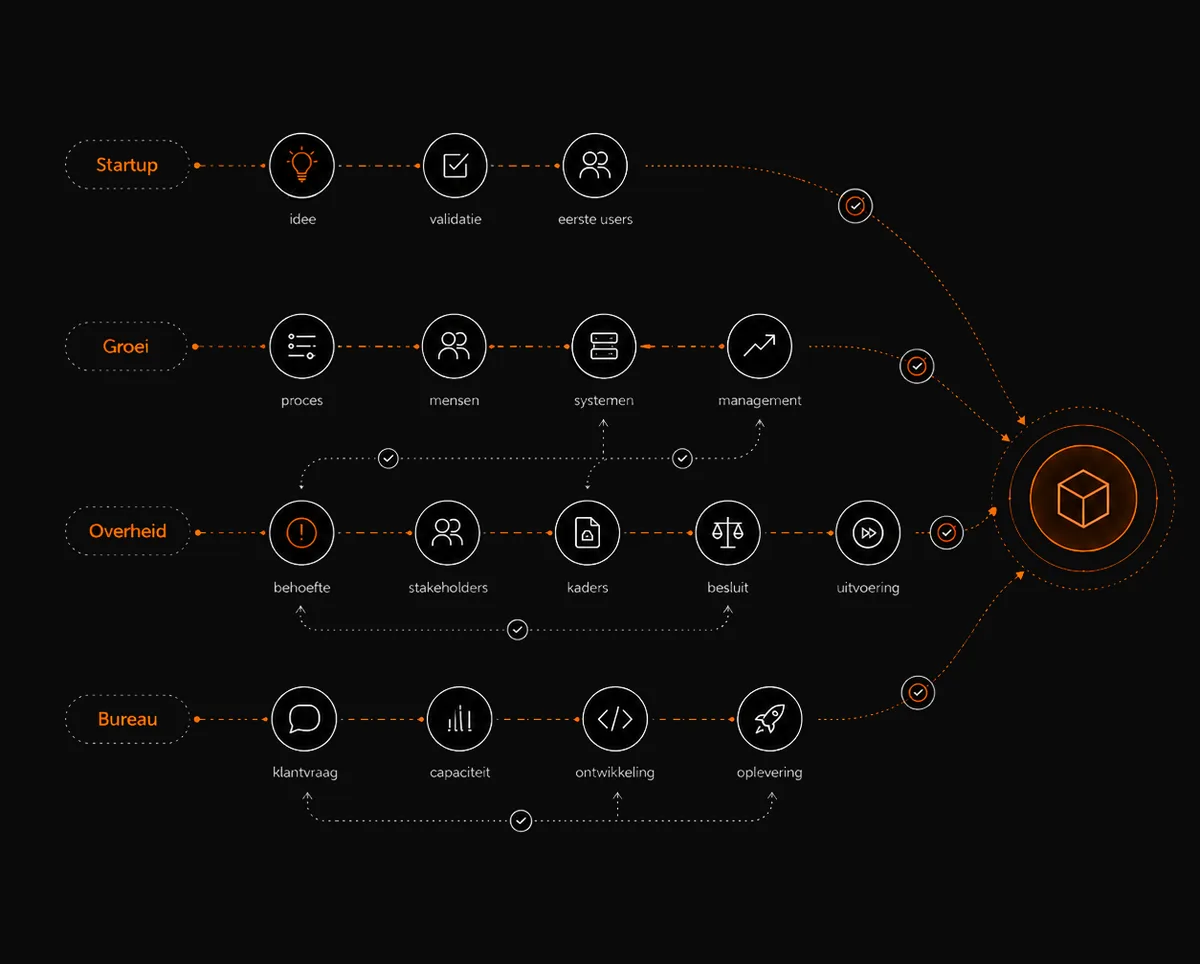
02 / The organisation behind the solution
Not every organisation needs the same thing.
A startup needs to be able to test and adjust quickly. A growing organisation wants to get its processes and management in order. A municipality has to deal with accessibility, privacy and public accountability. A software agency needs to be able to scale up without losing control of quality.
That is why we don't just look at what you want to build. We also look at how decisions are made, what knowledge exists in-house, which systems are already in place and what is needed after delivery.
03 / Recognise your organisation
What context do you work in?
Choose the route closest to your situation. The boundaries are not fixed: a fast-growing SME, for example, can face the same technical challenges as a larger organisation.
SMEs and growing organisations
You want to depend less on separate files, outdated systems or manual work, without immediately setting up a heavy IT project.
Startups and scale-ups
You want to validate an idea, launch a digital product or scale up in a controlled way without building too much too soon.
Large organisations
You want to innovate within existing systems, processes and responsibilities, with attention to continuity, adoption and support.
Municipalities and government
You are looking for accessible and secure digital services that fit within policy, privacy, procurement and public accountability.
Charities and social organisations
You want to achieve more reach or social impact with limited capacity and a solution that stays easy to manage.
Software companies and digital agencies
You are looking for extra development capacity, specialist expertise or an independent technical view alongside your own team.
04 / Decision guide
Not sure which route suits you?
Six short questions about your organisation. Then you'll see which route fits and which solution is the best place to start. You don't need to leave any details.
- What kind of organisation are you?
- What do you mainly want to achieve?
- Where are you now?
- How is IT organised at your end?
- What matters most to you in working together?
- How sure are you about the solution?
05 / What really makes a difference
How your organisation works determines what is needed.
Two organisations with the same number of employees can need a completely different approach. These are the factors that weigh more heavily for us than a simple label such as small, large or public.
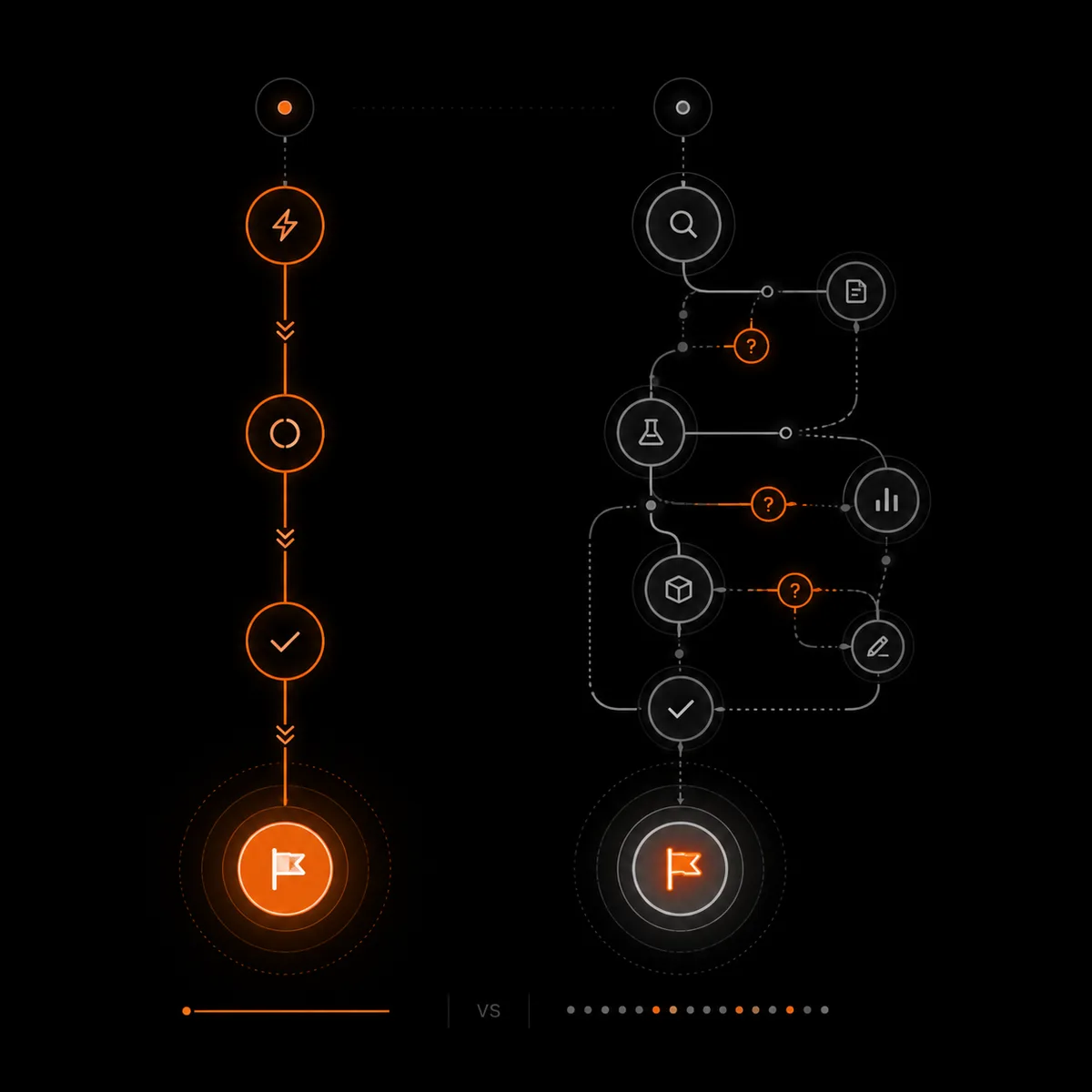
Stage and pace
Does an idea need to be explored first, do you want to launch something quickly or does an existing system need to be renewed in a controlled way? The stage your organisation is at determines how much we work out in advance and at what pace we develop.
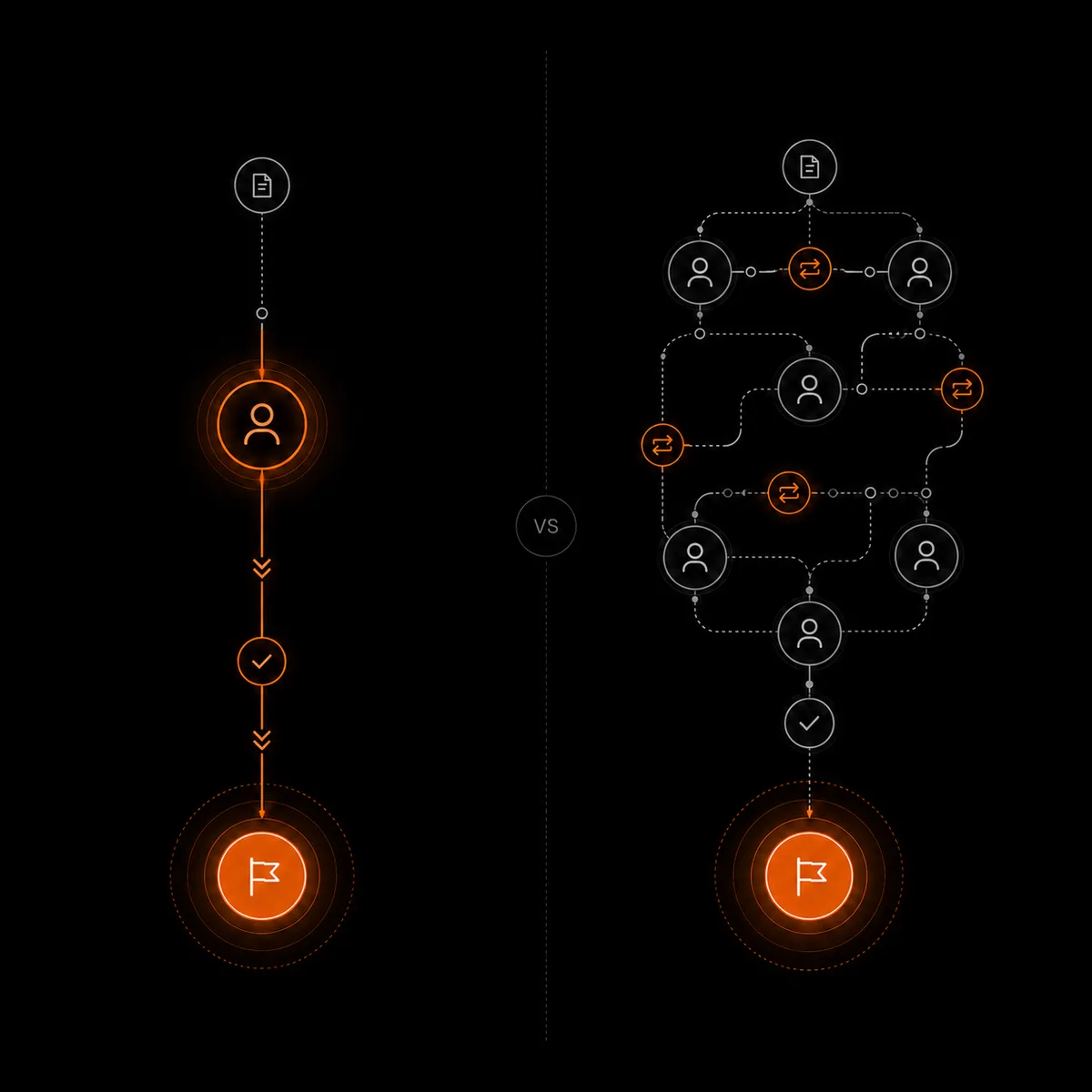
People and decision-making
In one organisation a single owner can decide straight away. In another, users, management, IT, communications, procurement and privacy all need to be involved. That affects not only the process but also which solution ultimately has support.
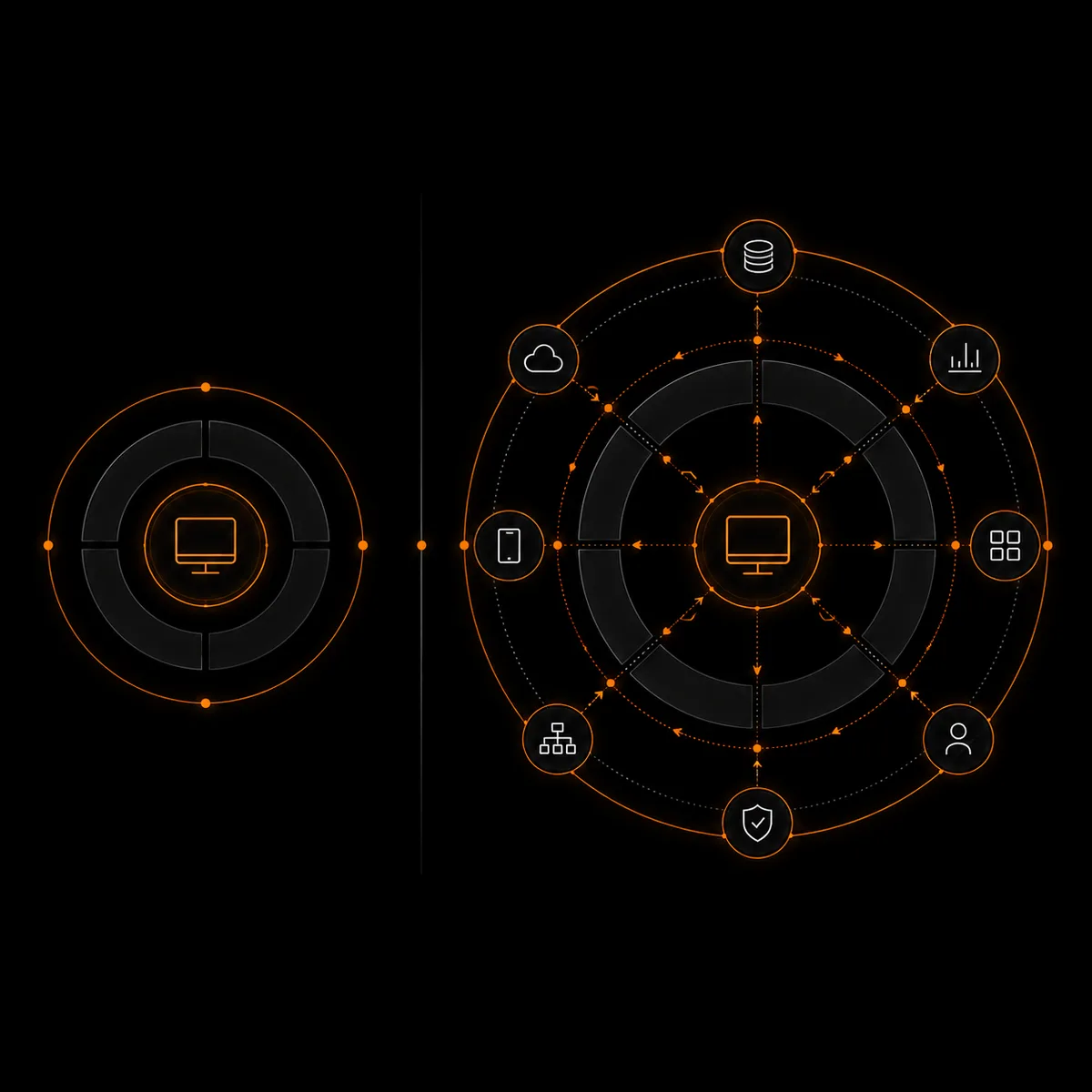
Processes and technology
Are we building something completely new, connecting to existing software or do several systems need to work together? The current processes and technical environment determine how much freedom there is and where the real complexity lies.
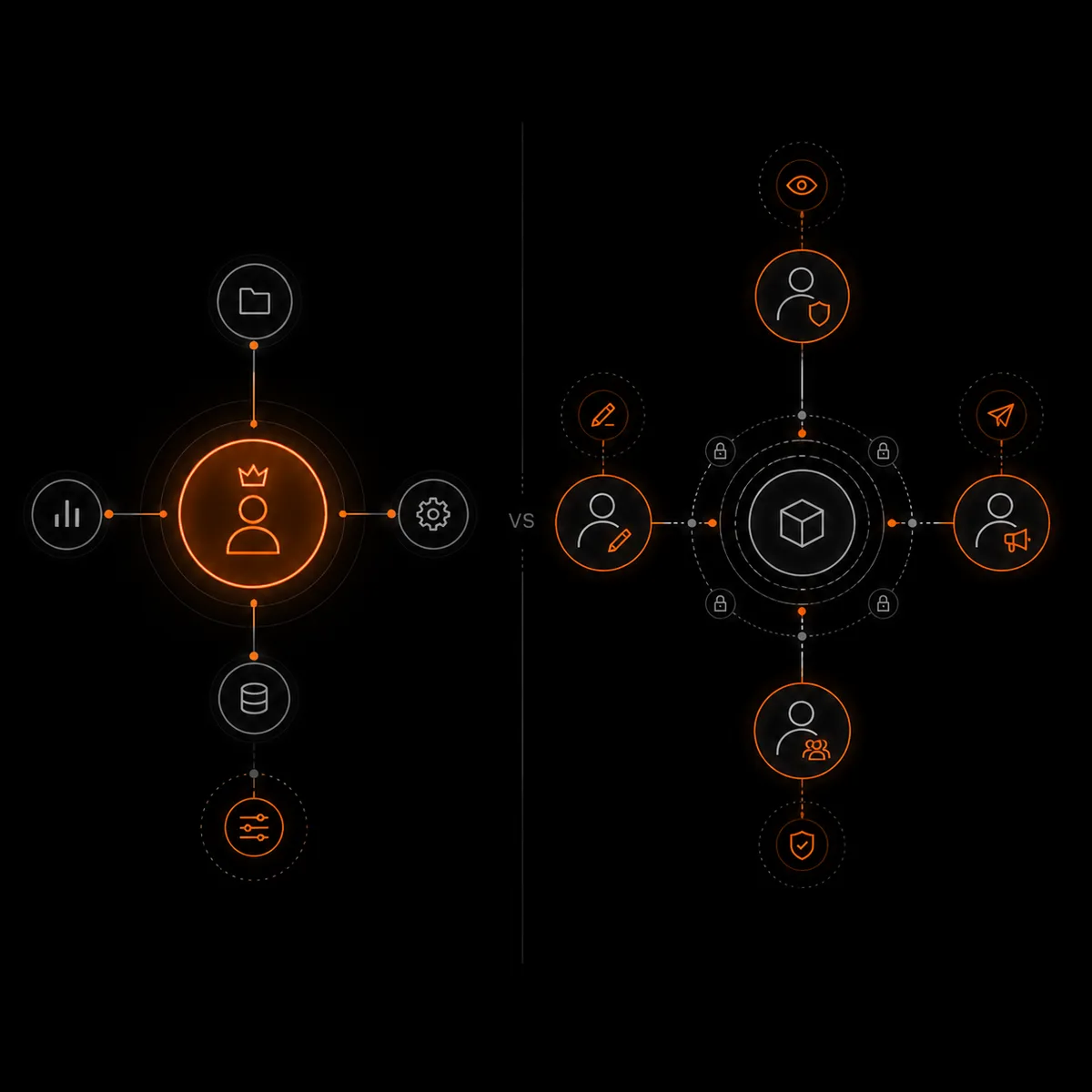
Management and continuity
Who manages the content, users, processes and technology after delivery? A solution must not only be built well, it must also fit the people and responsibilities in the day-to-day organisation.
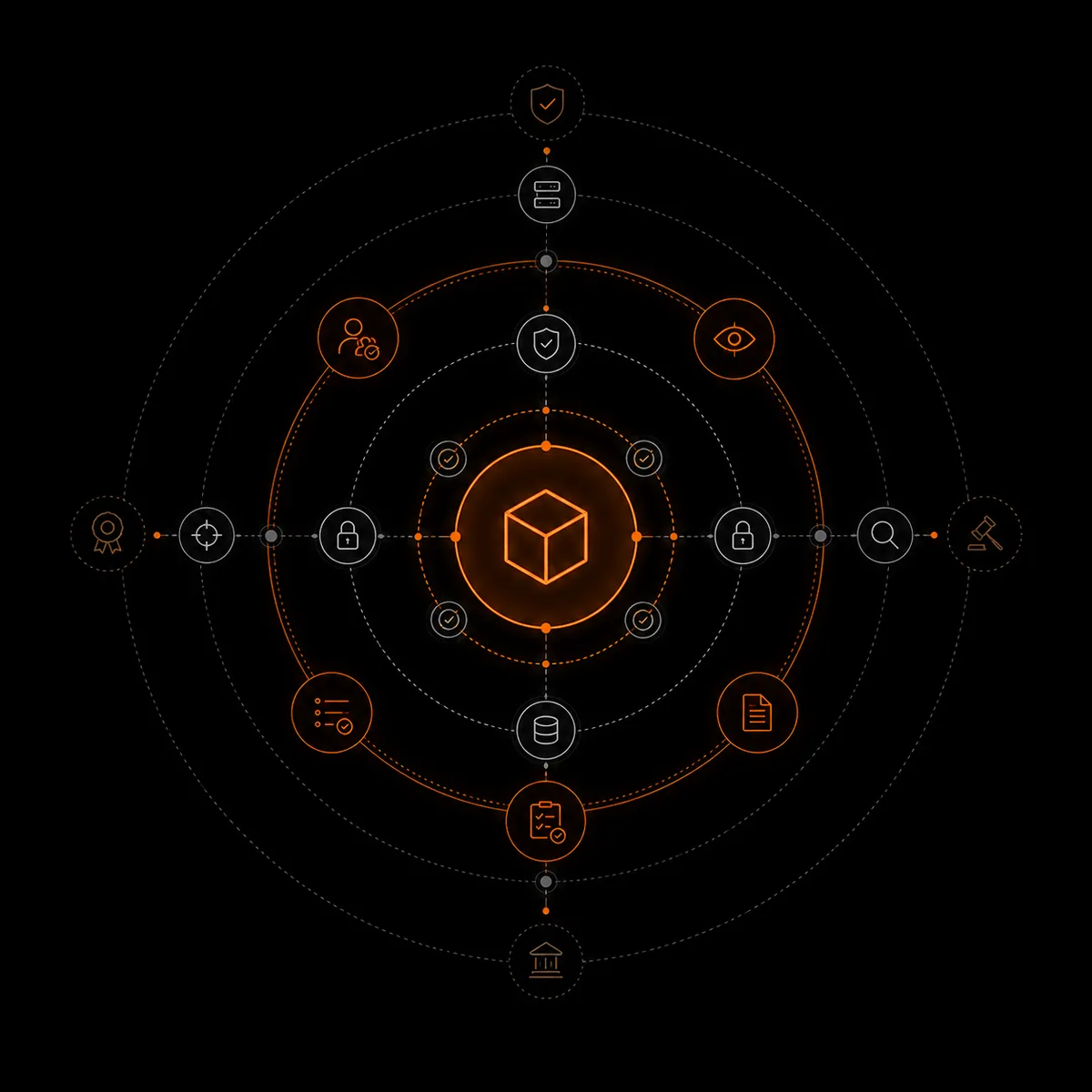
Risk and accountability
Privacy, accessibility, information security and business continuity don't carry the same weight everywhere. By considering these topics early, we prevent them from causing delays, extra costs or limitations later on.

06 / No fixed combination
Your organisation determines the approach, not a solution decided in advance.
A startup doesn't necessarily need custom software. A municipality doesn't always have to start with an extensive platform. And an SME may well need a business-critical application.
That is why only then do we translate your situation into a suitable route: a website or platform, custom software, extra development capacity or technical consultancy. Sometimes a combination makes sense. Sometimes building less is the better investment.
07 / Our approach
First understand, then advise.
We make no assumptions based on your sector or number of employees. We first map out the context behind the question.
- Step 1
Understanding the situation
We discuss what you want to improve, who the solution is for and where things are currently getting stuck.
- Step 2
Making preconditions visible
We look at existing technology, internal knowledge, budget, pace, management, decision-making and risks.
- Step 3
Choosing the right route
We advise which combination of platform, custom work, development capacity or technical guidance fits.
- Step 4
Starting with focus
We define a first step that delivers demonstrable value, without committing straight away to an extensive project.

Good software doesn't start with code. It starts with the right questions.
Every organisation has its own ambitions, processes and challenges. That is why we look beyond the first question and search for what really makes a difference.
Whether that's a user-friendly website, smart automation or a complete digital platform.