


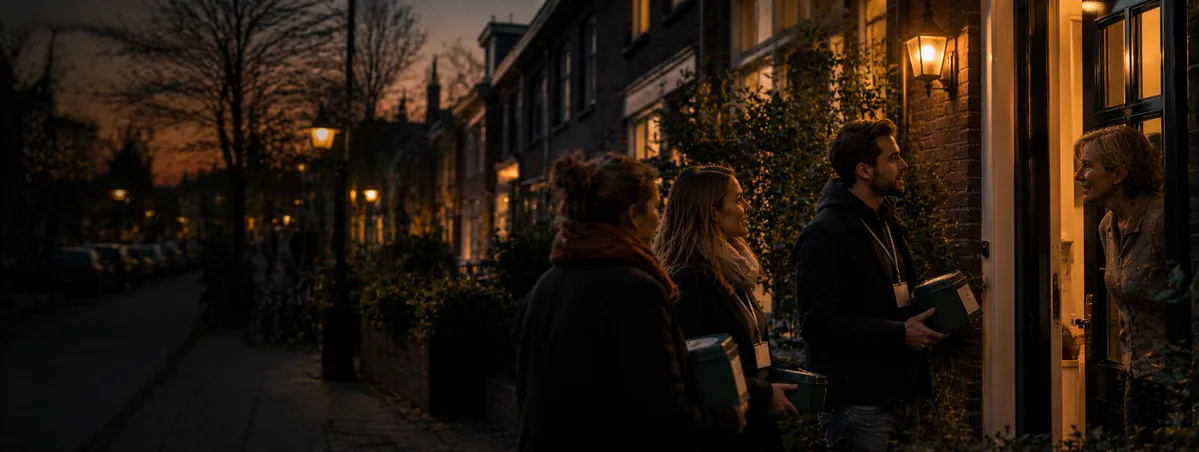
01 / Charities & initiatives
Digital help for charities that want to spend every euro well.
A charity runs on committed people: volunteers, donors, collectors and a small team that holds everything together. That takes enough time already. Software should help with that, not create extra work.
We build websites, portals and integrations that fit the budget and the people of social organisations. We start small, and only build further on what demonstrably helps.
02 / Familiar challenges
Lots of commitment, little time and a tight budget.
Social organisations do a lot with little. That is exactly why it hurts when the website, the membership list or the collection schedule costs more time than it saves.
Every euro has to go to the cause.
Donors and funds want as much of their money as possible to reach the cause. Investing in software then quickly feels like an expense you have to justify.
The work runs on volunteers who come and go.
The knowledge sits with a few people. When the volunteer who kept the website or the membership list up to date leaves, nobody knows how it works any more.
Donors expect online convenience.
Donating in a few taps, a confirmation by email and updating your own details. What is normal for an online shop, people also expect from a charity.
Data is scattered across lists and mailboxes.
An Excel sheet of volunteers, another file of donors and a mailbox full of sign-ups. That is double work, and it makes it hard to get privacy right.
03 / Decision guide
Where does your organisation start?
Six short questions, then advice on the first step and the package that suits you. You don't need to leave any details.
- What do you mainly want to achieve?
- What does it look like now?
- Who will mainly be working with it?
- What does your organisation look like?
- What should your website be able to do?
- How do you feel about a partnership with something in return?
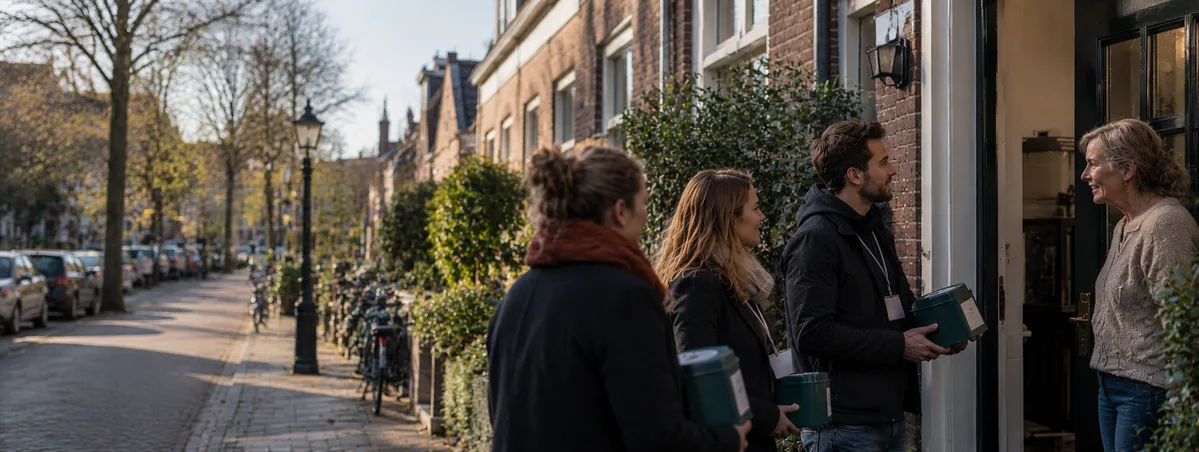
04 / Take the street collection
A street collection runs on people. And on lists.
A collection week takes a lot of preparation. Dividing up neighbourhoods, recruiting collectors, handing out tins, sending round rotas, and afterwards counting and processing everything. Usually that happens with spreadsheets, emails and a coordinator who keeps it all in their head.
It can be done smarter. Collectors sign up online and choose a neighbourhood themselves. The coordinator sees in one overview which streets are still open. And a QR code on the tin makes donating possible for people who no longer carry cash.
Software for a charity has succeeded when volunteers don't have to think about it.

05 / How we start
Start small, with what delivers the most.
We don't start with a big plan, but with a conversation about what your organisation does and where things are stuck right now. Then we choose the first step together.
- Getting to know you. We hear who is involved in your organisation and where time is being lost.
- Choosing the first step. The part that delivers the most for the budget available.
- Building and trying out. A first version that volunteers and staff can use straight away.
- Handing over. Explanations and documentation, so you can carry on when volunteers change.
06 / Why TokoWorks?
Sensible with your budget, committed to your cause.
You don't need an IT department to use good software. You do need a partner who thinks along about what is really needed, and what isn't.
We start small
First the part that delivers the most. What comes next, you decide based on what works.
Manageable by volunteers
Simple enough for someone who works with it a few hours a week, with explanations that stay when someone leaves.
Donor privacy taken care of
Donor and volunteer data is properly protected, with a data processing agreement and clear arrangements.
You talk to the makers
No account manager in between. You discuss choices directly with the people who carry them out.
07 / Good to know
Questions charities ask us.
About management, costs, privacy and integrations. If your question isn't here, send us a message.
Can volunteers keep the website up to date themselves?
Yes. The TokoWorks platform is made for editing pages, news and forms without technical knowledge. We take care of the technology, updates and backups.
What does it cost?
A website on our platform starts at €49 per month excl. VAT, including design, build and technical management. For a few small charities we have Community: a website without a monthly fee, in exchange for feedback and visibility. For portals and integrations we make a proposal per phase in advance, so you know where you stand.
How do you handle donor data?
Carefully. We sign a data processing agreement, staff and volunteers only see what they need, and the data stays within the EU.
Can you integrate with our donor or membership system?
If that system has an API or another reliable way to connect, usually yes. We check in advance which data is available.
Who owns the website and the data?
Your organisation. We agree on ownership and handover in advance, so you're never locked in.