



01 / Municipalities & government
Software for municipalities and government that works for every resident.
Residents expect to arrange things online, as easily as with an online shop. At the same time, there are requirements a commercial party never faces: accessibility, information security, privacy and transparency.
We build digital services and internal systems that meet them, and that you keep control of yourself after delivery.
02 / Familiar challenges
High expectations, strict requirements and a tight schedule.
A government organisation digitalises under different circumstances from a business. There is less room to experiment, and every choice must be explainable to residents, the council and regulators.
Residents want to be able to arrange everything online.
An application, a report or the status of a permit. If that isn't easy, someone calls or emails anyway, and that means double work for your organisation.
You're stuck with a supplier or an outdated system.
Every change takes a long time and costs a lot, because only that one party can access it. Switching feels like a risk nobody dares to take.
Accessibility and privacy are not an afterthought.
Digital services must be usable by everyone, including people who are visually impaired or use assistive technology. And residents' data calls for extra care.
There is more work than people to do it.
Information management runs on a small team. Renewal has to happen alongside day-to-day management, within budgets set each year.
03 / How we help you
From the resident's form to the system behind it.
Good digital services start with the resident, but stand or fall by what happens behind the scenes. That is why we look at the whole journey, not just the screen someone sees.
01
Residents and businesses
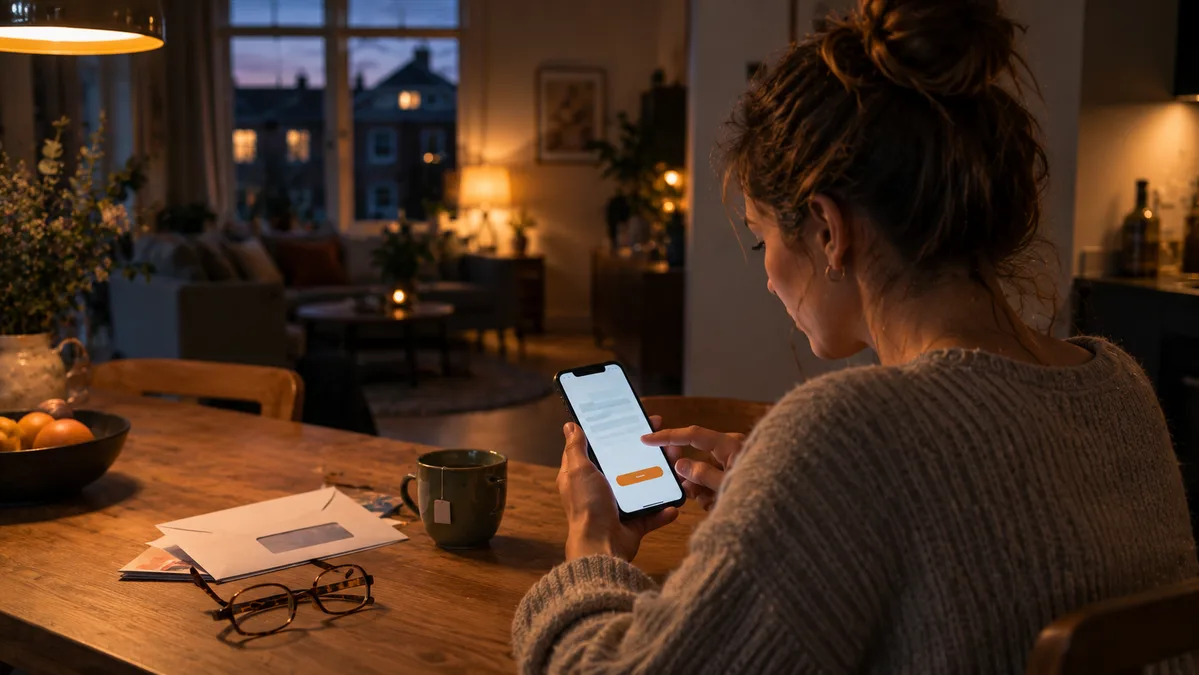
A resident wants to submit an application, make a report or find out how their case is progressing. On a phone, in between other things, and without first having to work out which department is responsible.
We build portals and forms that work like that. Clearly written, with only the questions that are really needed, and accessible to people who use a screen reader or magnification. That way fewer people need to call to ask how things stand.
Applications and reports
Smart forms that pre-fill known details and only ask for what is needed.
Status tracking
Residents can see for themselves where their application is, without having to call or email.
Accessible to everyone
Usable with keyboard, screen reader and magnification, even on a small phone.
02
Employees

Behind every online form there is an employee who handles the application. If it arrives as a separate email with a PDF, something has become digital for the resident, but not for the organisation.
We set up the handling so that the system does the routine work. That way employees' time goes to the cases that really need attention.
In the right place
Applications automatically reach the right team, with a clear owner.
Already filled in
Nobody has to retype or check details that are already known.
Insight into waiting times
An overview shows which cases are stalling, before a resident picks up the phone.
03
Integrations and data

A municipality works with dozens of systems, and most data already exists somewhere. The problem is that it is often retyped or copied into every new system, resulting in errors and outdated copies.
We connect via open standards and APIs, so data stays at the source and is retrieved where it is needed. That fits the thinking behind Common Ground, and makes you less dependent on one supplier. A few examples of integrations we often come across:
| System | What it gives the resident or employee |
|---|---|
| Case management system | The status of an application appears automatically in the portal |
| Key registers (BRP, BAG, KvK) | Address and company details are pre-filled and correct |
| Document management | Attachments go straight into the right file |
| Financial system | Fees and payments are processed without manual work |
04
Security and privacy

Residents' data calls for extra care, and securing things afterwards is more expensive and less reliable than getting it right from the start. That is why we arrange this from the first sketch, together with your CISO and privacy officer.
BIO
We agree the requirements of the Baseline Informatiebeveiliging Overheid (the Dutch government information security baseline) in advance and translate them into concrete measures.
GDPR and DPIA
We sign a data processing agreement and contribute to a DPIA when the processing requires one.
Access and logging
Employees only see what they need, and who viewed or changed what can be traced.
Hosting
In your own environment or hosted by us, with the data within the EU.
You can tell a good digital service mainly by what doesn't happen: no phone call to ask how things stand, and no form someone gives up on halfway.
04 / Our approach
From first exploration to management.
We start small and only scale up what has proven to work. That keeps the risk manageable, and you can explain every step to the council and the organisation.
- 01
Sharpening the question
We talk to the people who do the work and to residents who use the service. Afterwards you know what the problem is, and roughly what a solution requires.
Exploring - 02
Proving it small
A first working version for one service, one team or one neighbourhood. Real users test along, so you decide on experience and not on a plan.
Pilot - 03
Expanding in phases
What works, we develop further in short rounds. Each round delivers something usable, and you adjust course before it gets expensive.
Delivery - 04
Handing over or developing further together
With documentation and knowledge transfer, your own team can take over management. Or we stay involved for updates and further development.
Management
05 / Why TokoWorks?
Open, transferable and free of lock-in.
A government body must be able to switch supplier and account for what has been built. We take that into account from the start.
The code is yours
Source code, data and documentation are owned by your organisation. We agree on ownership and handover in advance.
Open standards
We connect via documented APIs and common standards, so another party or your own team can carry on with it later.
Accessible by design
We build to the WCAG guidelines and test with screen readers and keyboard, instead of fixing accessibility afterwards.
You talk to the makers
No account manager in between. You discuss choices directly with the people who carry them out, which keeps the lines short.
06 / Good to know
Questions public bodies ask us.
About accessibility, information security, hosting and dependency. If your question isn't listed, send us a message.
Does what you build meet the accessibility requirements?
We design and build to the WCAG guidelines that apply to government bodies, and test with screen readers and keyboard navigation. We arrange an external accessibility audit and the accessibility statement together with you.
How do you deal with the BIO and the GDPR?
We agree the requirements in advance with your CISO and privacy officer. We arrange access control, logging and data storage from the start, we sign a data processing agreement and contribute to a DPIA where needed.
Where is the data stored?
We decide that together. In your own environment, or hosted by us. Either way, the data can stay within the EU.
Can you integrate with our case management system and the key registers?
If those systems offer an API or another reliable way to connect, usually yes. We first look into which data is available and which agreements apply to it.
Are we tied to you afterwards?
No. The code, documentation and data are yours, and we work with open standards. Your own team or another party can take it over, and we help with that handover.